📘 Week 2 – Collections and Exceptions
🎯 Week Objective
This week focuses on two extremely important areas in backend development:
- Java Collections Framework
- Exception Handling
By the end of this week, you should:
- Understand how data is stored and managed in memory using collections
- Choose the correct collection based on use case
- Understand
equals()andhashCode()importance - Handle runtime errors gracefully
- Write custom exceptions
- Use Java 8 Streams for filtering and transformations
This week transitions you from “writing Java code” to “thinking like a backend developer”.
📦 Part 1 – Java Collections Framework
1️⃣ Why Collections Matter in Backend Development
In real backend systems:
- APIs return lists of objects
- Databases return collections of rows
- Services transform and filter data
- Data needs to be grouped, sorted, searched, cached
Collections are everywhere.
If you misuse them, performance suffers.
2️⃣ Overview of Collection Hierarchy
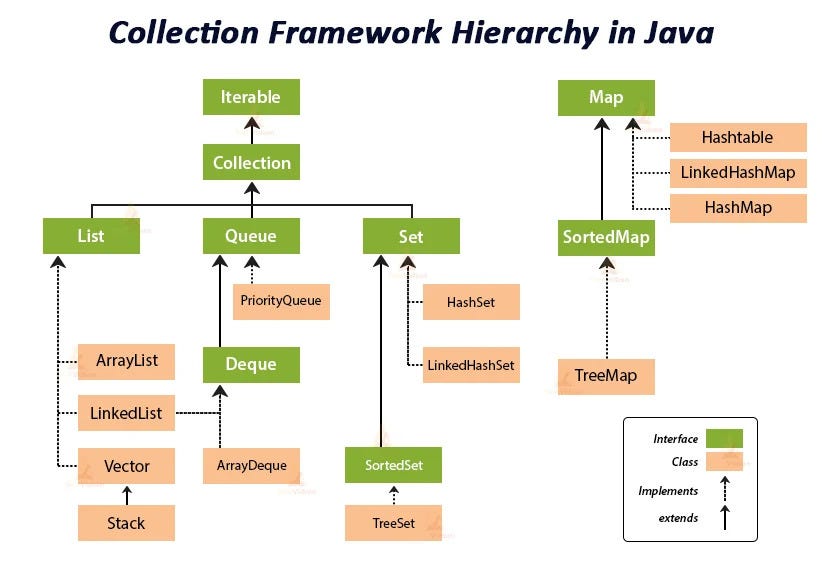
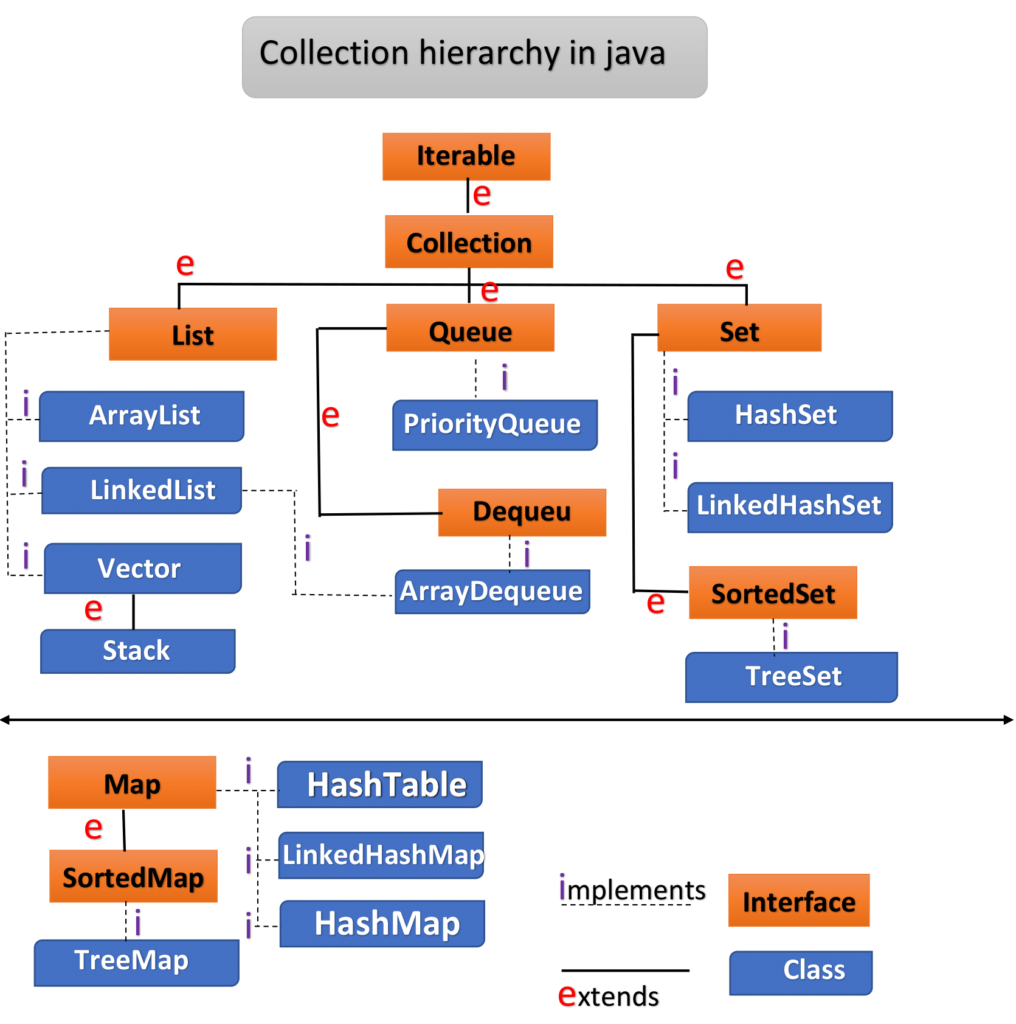
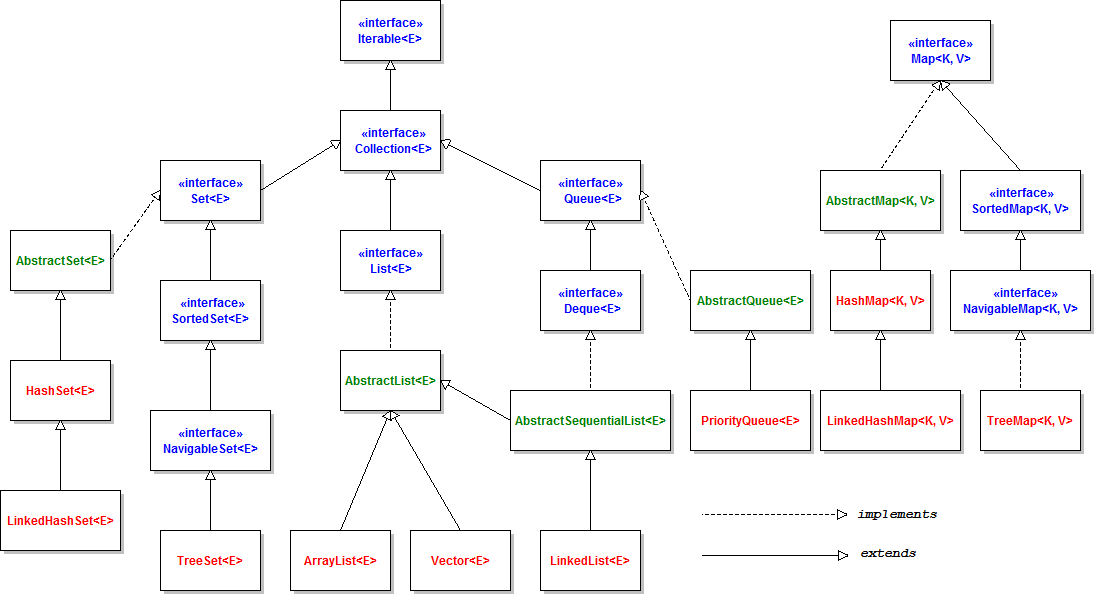
Core Interfaces:
-
Collection(root interface)ListSetQueue
⚠️ Map is NOT part of Collection interface hierarchy.
📚 List Interface
Characteristics:
- Ordered
- Allows duplicates
- Index-based access
Common Implementations:
ArrayListLinkedList
ArrayList
Internally:
- Backed by dynamic array
- Fast random access
- Slow insert/delete in middle
Use When:
- Frequent reads
- Rare insertions in middle
Example:
List<String> names = new ArrayList<>();
names.add("Aditya");
names.add("Rahul");
names.add("Aditya");  // duplicates allowed
LinkedList
Internally:
- Doubly linked list
Use When:
- Frequent insertions/deletions
- Rare random access
⚠️ Interview-Level Understanding
| Operation | ArrayList | LinkedList |
|---|---|---|
| Get by index | O(1) | O(n) |
| Add at end | O(1) | O(1) |
| Insert middle | O(n) | O(1) |
Backend engineers must choose based on usage pattern.
📚 Set Interface
Characteristics:
- No duplicates
- Unordered (usually)
Common implementations:
HashSetLinkedHashSetTreeSet
HashSet
- Backed by HashMap
- No order guarantee
- Fast lookup
Important: Uses hashCode() and equals().
Example:
Set<String> emails = new HashSet<>();
emails.add("a@test.com");
emails.add("a@test.com"); // ignored
Why equals() and hashCode() Matter
If you store custom objects inside HashSet or HashMap, and do not override these methods, duplicates may not behave correctly.
Example:
class Student {
    String name;
    int id;
}
Without overriding: Two students with same id may still be treated as different.
Backend impact:
- Duplicate records
- Caching errors
- Memory waste
📚 Map Interface
Characteristics:
- Key-value pairs
- Keys must be unique
Common implementations:
HashMapLinkedHashMapTreeMapConcurrentHashMap
HashMap
- Fast lookup (O(1) average)
- Not thread-safe
- Allows one null key
Example:
Map<Integer, String> studentMap = new HashMap<>();
studentMap.put(1, "Aditya");
studentMap.put(2, "Riya");
Internal Working (High Level)
- Uses hashing
- Bucket structure
- Collision handling (Linked list / Tree in Java 8+)
Backend developers must understand this to avoid performance issues.
⚡ Java 8 Streams
Streams allow functional-style operations on collections.
Example:
List<String> names = List.of("Aditya", "Riya", "Rahul");

List<String> filtered =
    names.stream()
         .filter(name -> name.startsWith("R"))
         .collect(Collectors.toList());
Common Stream Operations:
- filter()
- map()
- collect()
- sorted()
- distinct()
- count()
Streams are heavily used in modern backend systems.
🚨 Part 2 – Exception Handling
1️⃣ Why Exception Handling Is Critical
Backend systems must:
- Handle invalid input
- Handle database errors
- Handle null values
- Avoid crashing production systems
Good developers handle failures gracefully.
2️⃣ Exception Hierarchy
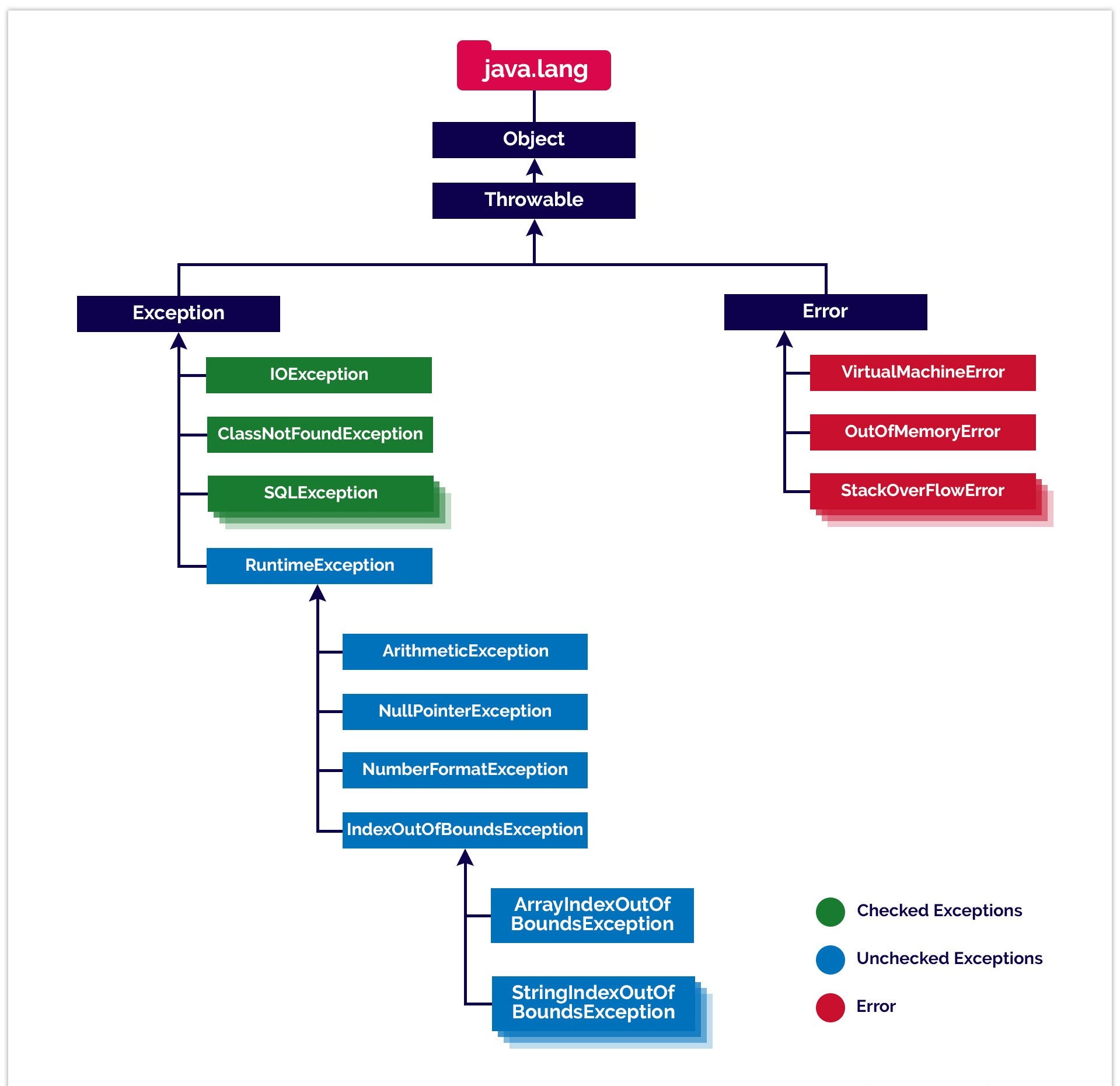

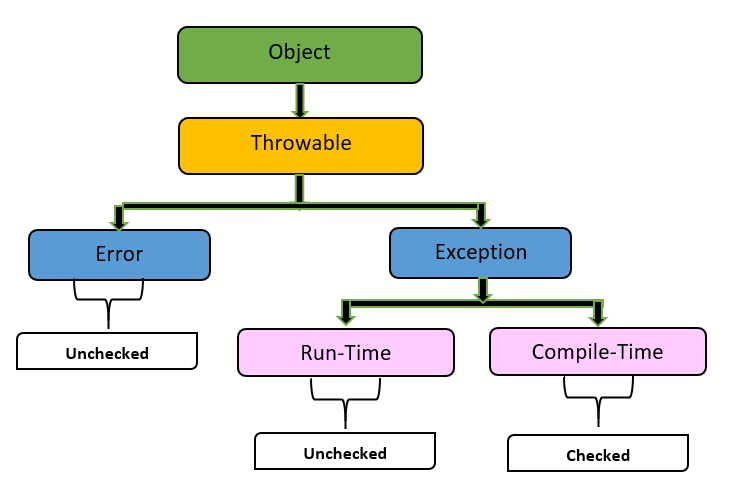

Throwable
- Error
- Exception
Checked Exceptions
Must be handled or declared.
Examples:
- IOException
- SQLException
Unchecked Exceptions (RuntimeException)
Not required to handle.
Examples:
- NullPointerException
- IllegalArgumentException
- IndexOutOfBoundsException
3️⃣ Try-Catch-Finally
Example:
try {
    int result = 10 / 0;
} catch (ArithmeticException e) {
    System.out.println("Cannot divide by zero");
} finally {
    System.out.println("Execution completed");
}
4️⃣ Custom Exceptions
In backend systems, we create domain-specific exceptions.
Example:
public class StudentNotFoundException extends RuntimeException {
    public StudentNotFoundException(String message) {
        super(message);
    }
}
Use when:
- Entity not found
- Invalid business rule
- Unauthorized operation
🧠 Best Practices for Backend
- Never swallow exceptions silently
- Always log important exceptions
- Use meaningful messages
- Don’t catch generic
Exceptionunnecessarily - Fail fast when required
🔥 Week 2 Practical Application
You will now enhance the project from Week 1:
Add:
- Store students in List
- Prevent duplicate students using Set
- Use Map to store ID → Student
- Add filtering using Streams
- Throw custom exception when student not found
🏆 Expected Outcomes
By end of Week 2, you should be able to:
✔ Choose correct collection type ✔ Explain difference between List, Set, Map ✔ Override equals and hashCode correctly ✔ Use Streams confidently ✔ Write custom exceptions ✔ Handle runtime failures properly
📌 Mentor Note
This week is very important.
Most backend bugs happen because of:
- Wrong collection choice
- Poor exception handling
- Ignoring edge cases
Master this week and the rest becomes easier.